Parenting
Making Islamic Learning Feel Like Play
Simple, playful activities that make faith learning feel natural for young Muslim children.
Many parents want to teach their children about Islam from a young age.
They want their children to recognize Islamic words, understand simple concepts, and grow up with a love for their faith.
The challenge is that young children rarely learn best by sitting through lessons.
They learn through play.
When learning feels fun, interactive, and connected to everyday life, children are naturally more engaged.
The goal isn't to recreate a classroom at home.
The goal is to create small opportunities for learning that fit naturally into family life.
01Young Children Learn Through Doing
Children explore the world with their hands, eyes, and curiosity.
They enjoy:
- Matching
- Coloring
- Sorting
- Tracing
- Finding
- Drawing
- Talking
These simple activities help reinforce new ideas while keeping learning enjoyable.
02Keep Learning Short
Young children have short attention spans.
A five-minute activity can be just as valuable as a much longer lesson.
Rather than trying to teach many concepts at once, focus on one simple idea.
Small learning moments repeated consistently often have a greater impact than occasional long lessons.
03Connect Learning to Everyday Life
Islamic learning doesn't only happen during dedicated study time.
It can happen while:
- Reading a bedtime story
- Preparing meals together
- Going for a walk
- Visiting the masjid
- Talking about Allah's creation
- Practicing good manners at home
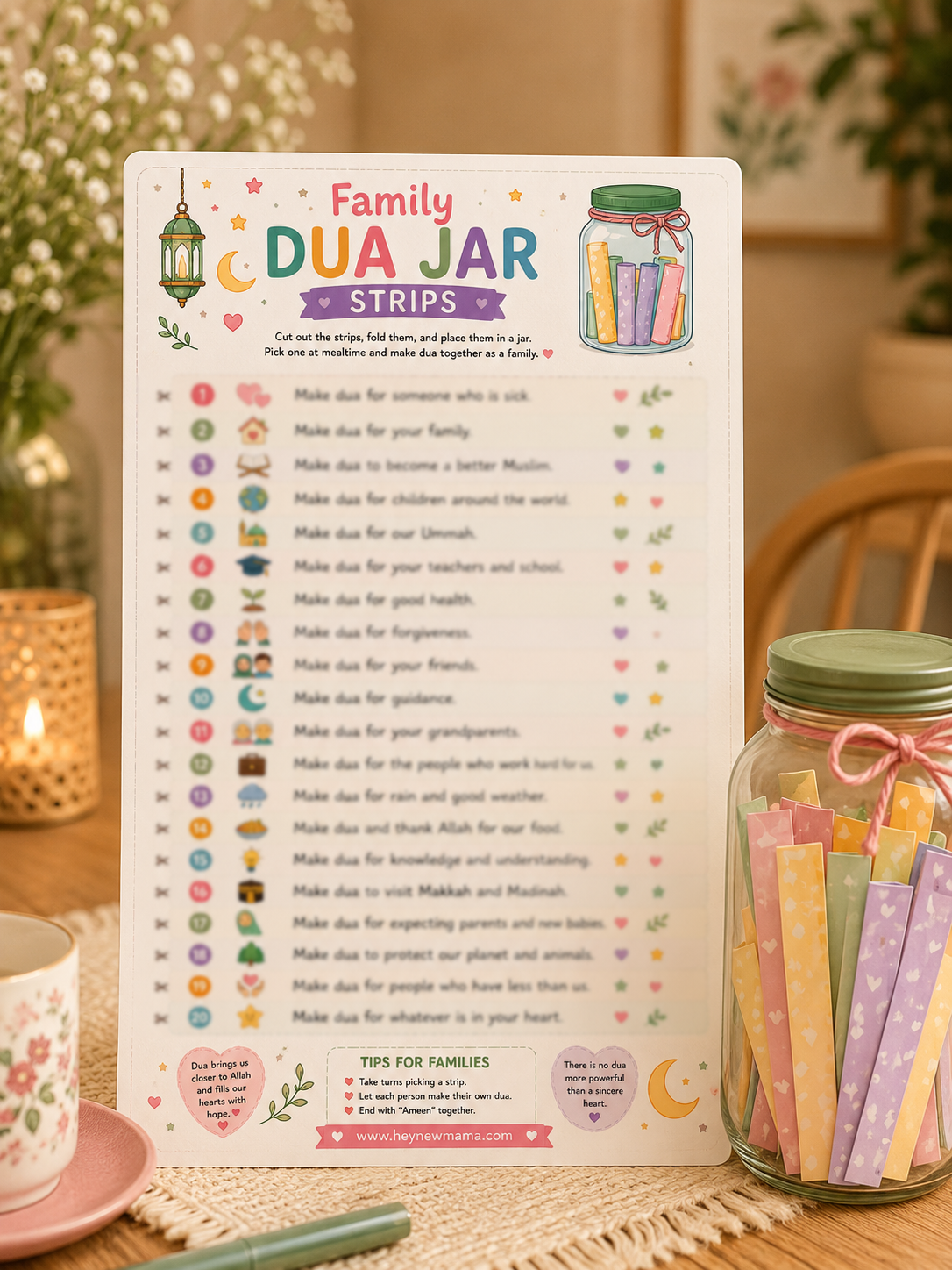
Simple activity sheets can reinforce these everyday experiences in a way that feels enjoyable rather than overwhelming.
04Encourage Conversation
Activities are most valuable when they spark discussion.
As your child colors, matches, or completes an activity, ask simple questions such as:
- What do you notice?
- Why is this important?
- Have we done this before?
- How can we practice this today?
These conversations help children connect what they are learning to real life.
05Focus on Curiosity, Not Perfection
Children may color outside the lines.
They may forget answers.
They may ask unexpected questions.
That is all part of learning.
The goal is not completing an activity perfectly.
The goal is encouraging curiosity and helping children develop positive feelings about learning their faith.
06Make Learning Part of Your Weekly Rhythm
Instead of saving Islamic learning for special occasions, include it in your regular family routine.
Even one or two simple activities each week can help children build familiarity with Islamic concepts over time.
Consistency matters more than quantity.
07Build Positive Memories Around Learning
Children are more likely to continue learning when they associate it with warmth, encouragement, and time spent together.
Simple activity sheets become more than worksheets.
They become opportunities to talk, laugh, ask questions, and strengthen your family's connection to Islam.
Those moments often become the foundation for a lifelong love of learning.