Lifestyle
Simple Ramadan Habits for Muslim Families
Small habits that bring more intention to Ramadan — without adding stress.
Ramadan often begins with the best intentions. Parents create plans, purchase books, print activity sheets, and imagine a month filled with meaningful family moments. Then real life happens. Children wake up early. Someone gets sick. The house gets messy. Dinner still needs to be made. The days move quickly. For many families, the most meaningful Ramadan routines are not the most elaborate ones. They are the small habits that can be practiced consistently throughout the month. If you're hoping to make Ramadan feel more intentional without adding stress, start with a few simple habits.
Start and End the Day With Gratitude
Ramadan naturally encourages reflection and gratitude. You can build this habit into your family's day by asking simple questions:
- What are you grateful for today?
- What was something good that happened today?
- What blessing did you notice today?
These conversations can happen at breakfast, iftar, bedtime, or during a car ride. The goal is not perfect answers. The goal is helping children notice Allah's blessings.
Make Bismillah Part of Everyday Life
Young children learn through repetition. Ramadan is a wonderful opportunity to strengthen habits such as saying Bismillah before:
- Eating
- Drinking
- Starting an activity
- Leaving the house
Small habits practiced consistently often become lifelong habits.
Read Something Small Together
Many parents feel pressure to create formal Islamic lessons during Ramadan. In reality, a few minutes of reading together can have a meaningful impact. This might include:
- A short Ramadan story
- A children's Islamic book
- A simple lesson about gratitude
- A discussion about a Prophet
Consistency matters more than quantity.
Involve Children in Acts of Giving
Ramadan is a month of generosity. Children can participate in age-appropriate ways by:
- Choosing food for a donation box
- Helping prepare food for others
- Donating toys or books
- Contributing to family charity projects
Participation helps children understand that Ramadan is about more than food and fasting.
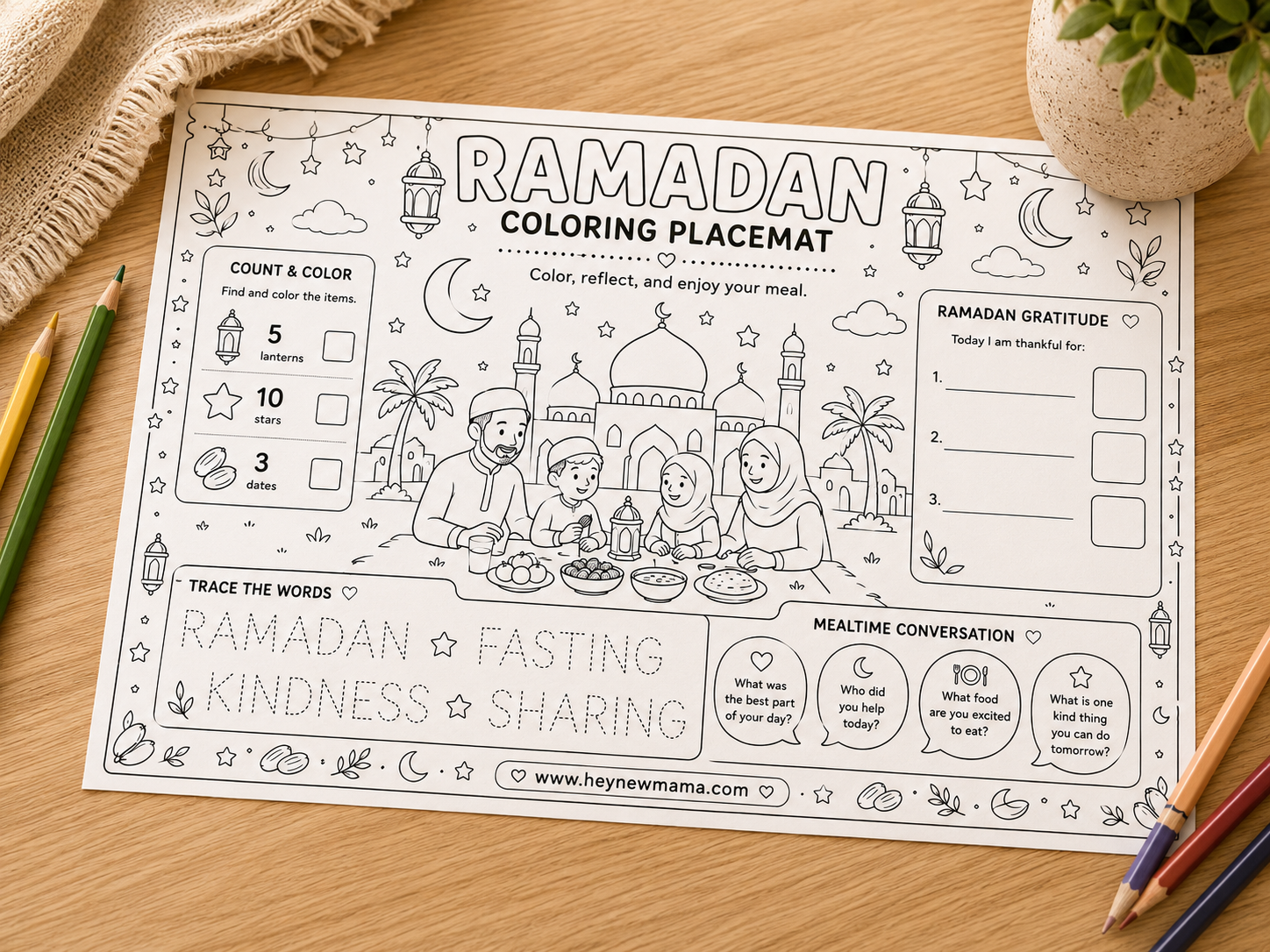
Create Simple Mealtime Traditions
Children often remember family traditions more than formal lessons. Simple ideas include:
- Sharing dates together at iftar
- Taking turns making dua
- Discussing one blessing from the day
- Helping prepare the table
- Using Ramadan-themed activities during meals
These traditions help children feel connected to the month.
Focus on Progress, Not Perfection
Not every day of Ramadan will go according to plan. Some days will feel meaningful and productive. Other days will feel messy and exhausting. Both are normal. Ramadan does not require perfection from parents or children. Small habits repeated consistently throughout the month often have a greater impact than ambitious plans that become overwhelming after a few days.
Choose Habits Your Family Can Sustain
The best Ramadan routine is not the most impressive one. It is the one your family can realistically maintain. A few simple habits practiced together can help children develop positive memories and meaningful connections with Ramadan year after year. Those small moments often become the traditions they carry into adulthood.