Parenting
Stop Searching for Activities: Create a Simple Play Rhythm Instead
Why a repeatable play menu works better than endless activity lists.
Many parents spend a surprising amount of time looking for activities.
You open Pinterest.
You search social media.
You save dozens of ideas.
And then, when your child is bored, tired, or following you around the house, you still aren't sure what to do.
The problem is rarely a lack of activity ideas.
The problem is that constantly searching for activities creates more decisions.
And for already overwhelmed parents, more decisions are often the last thing they need.
Why Activity Lists Stop Working
Most activity lists are designed to give you more ideas.
The assumption is that if you had enough ideas, boredom would disappear.
In reality, activity lists often create a different problem.
They leave parents feeling like they need to:
- Gather supplies
- Set up complicated activities
- Prepare special materials
- Constantly entertain their children
Before long, play starts feeling like another task on your to-do list.
Children Don't Need Constant Entertainment
Many children thrive when they have opportunities to explore, imagine, create, and move independently.
They do not need a brand-new activity every hour.
What often helps more is having a predictable rhythm.
A rhythm reduces decision fatigue for parents while helping children know what kinds of play are available throughout the day.
The Goal Is Calm, Not Constant Stimulation
Modern parenting advice often focuses on doing more.
More activities.
More enrichment.
More learning opportunities.
But many families are actually looking for something different.
They want:
- Less overwhelm
- Fewer decisions
- More independent play
- More peaceful days
A calm play rhythm supports these goals.
Different Types of Play Serve Different Purposes
Not all play needs to look the same.
Some activities help children move their bodies.
Others encourage creativity.
Some support quiet focus.
Others provide sensory experiences.
When parents understand that different types of play meet different needs, they no longer feel pressure to find the "perfect" activity.
Instead, they can choose from a small collection of reliable options.
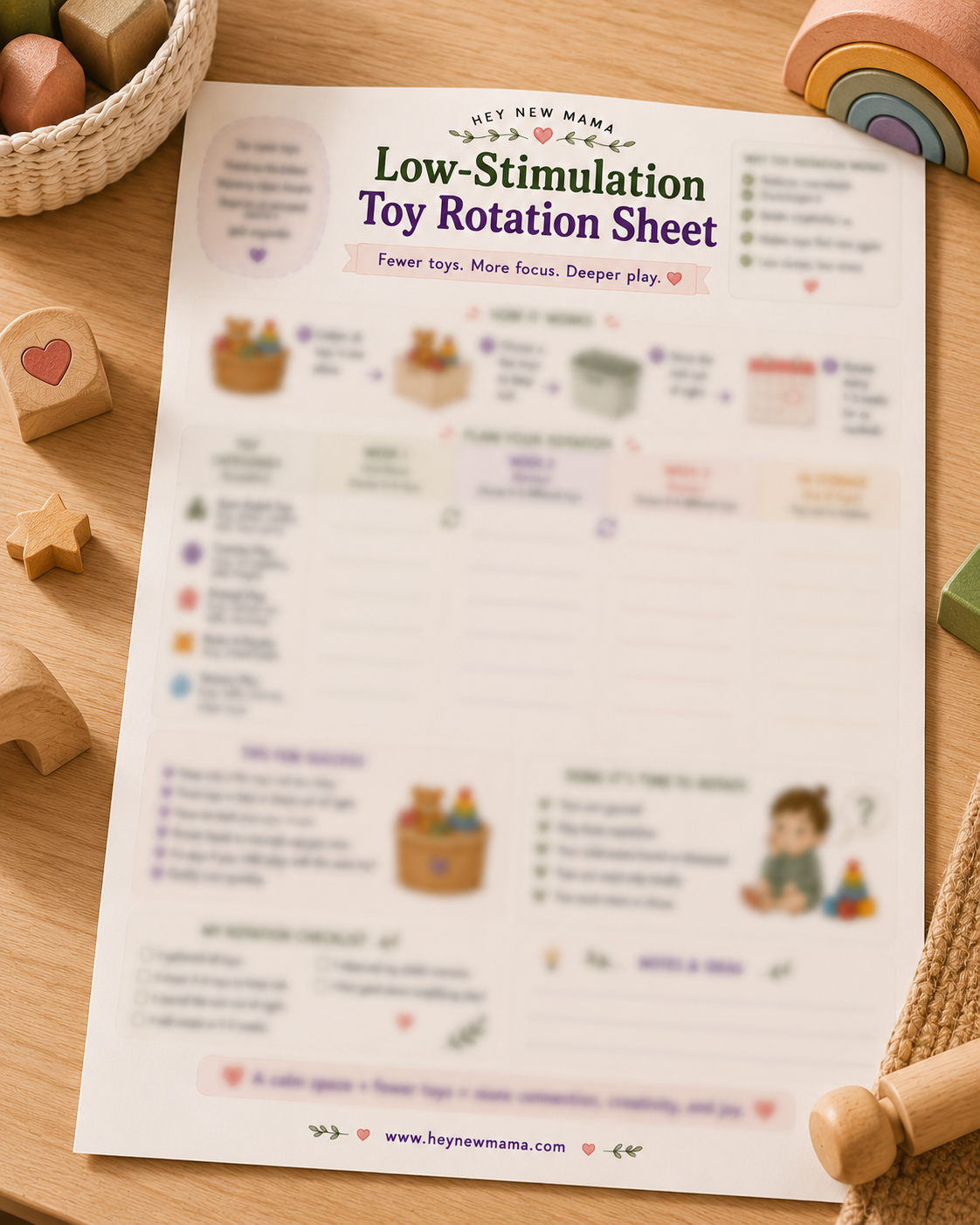
A Play Menu Makes Decisions Easier
Imagine opening your fridge and seeing a weekly meal plan instead of wondering what to cook.
A play menu works in a similar way.
Instead of constantly searching for ideas, you create a simple collection of activities your child already enjoys.
When you need an activity, you choose from the menu rather than starting your search from scratch.
The result is less stress for parents and more consistency for children.
Simplicity Often Works Best
Children are often happiest with activities that are familiar, accessible, and easy to repeat.
Many favorite activities require little preparation at all.
What matters most is not how creative or impressive an activity looks.
What matters is whether it fits your family's rhythm and can be used consistently.
Building a Home Environment That Supports Play
A calm play environment does not require expensive toys or elaborate setups.
It often comes from having a small number of trusted activities that are easy to access and easy to repeat.
When children know what is available and parents know where to turn, everyone benefits.
Less searching.
Less pressure.
More play.
Play Doesn't Have to Be Complicated
You do not need an endless supply of activity ideas to create meaningful days with your child.
A simple, repeatable play rhythm often works better than constantly searching for something new.
The goal is not to become your child's full-time entertainer.
The goal is to create an environment where play feels natural, accessible, and sustainable for your family.