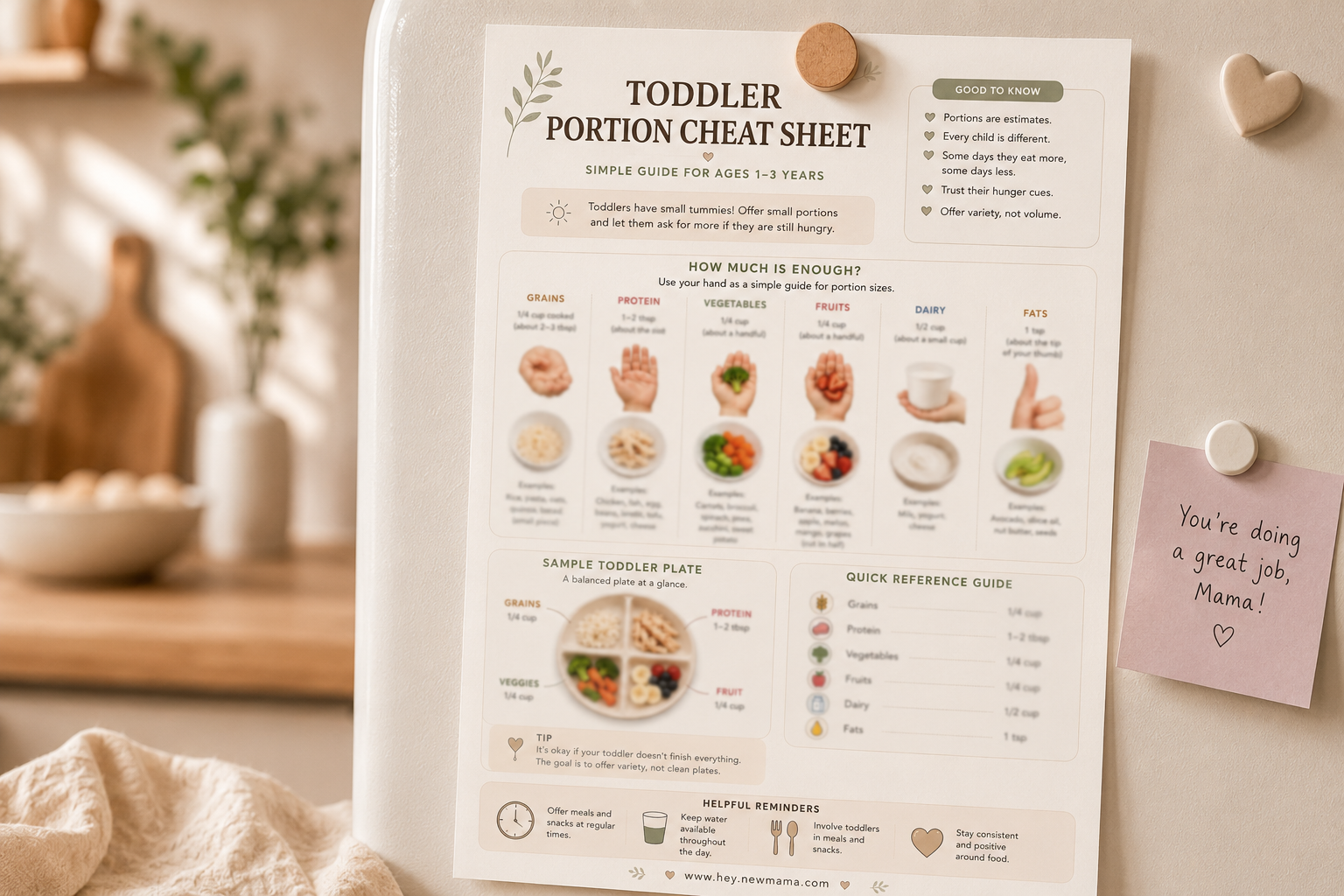
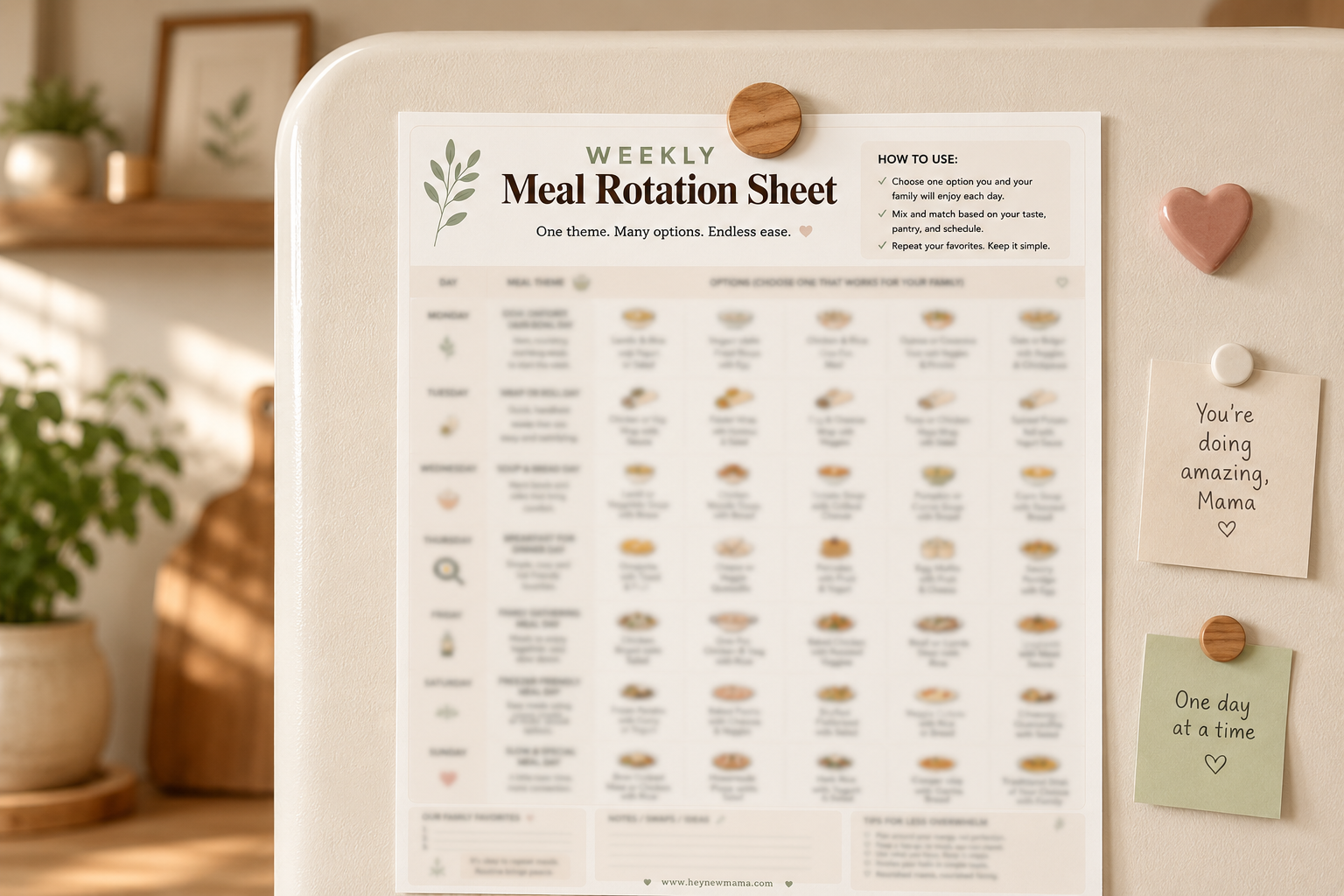
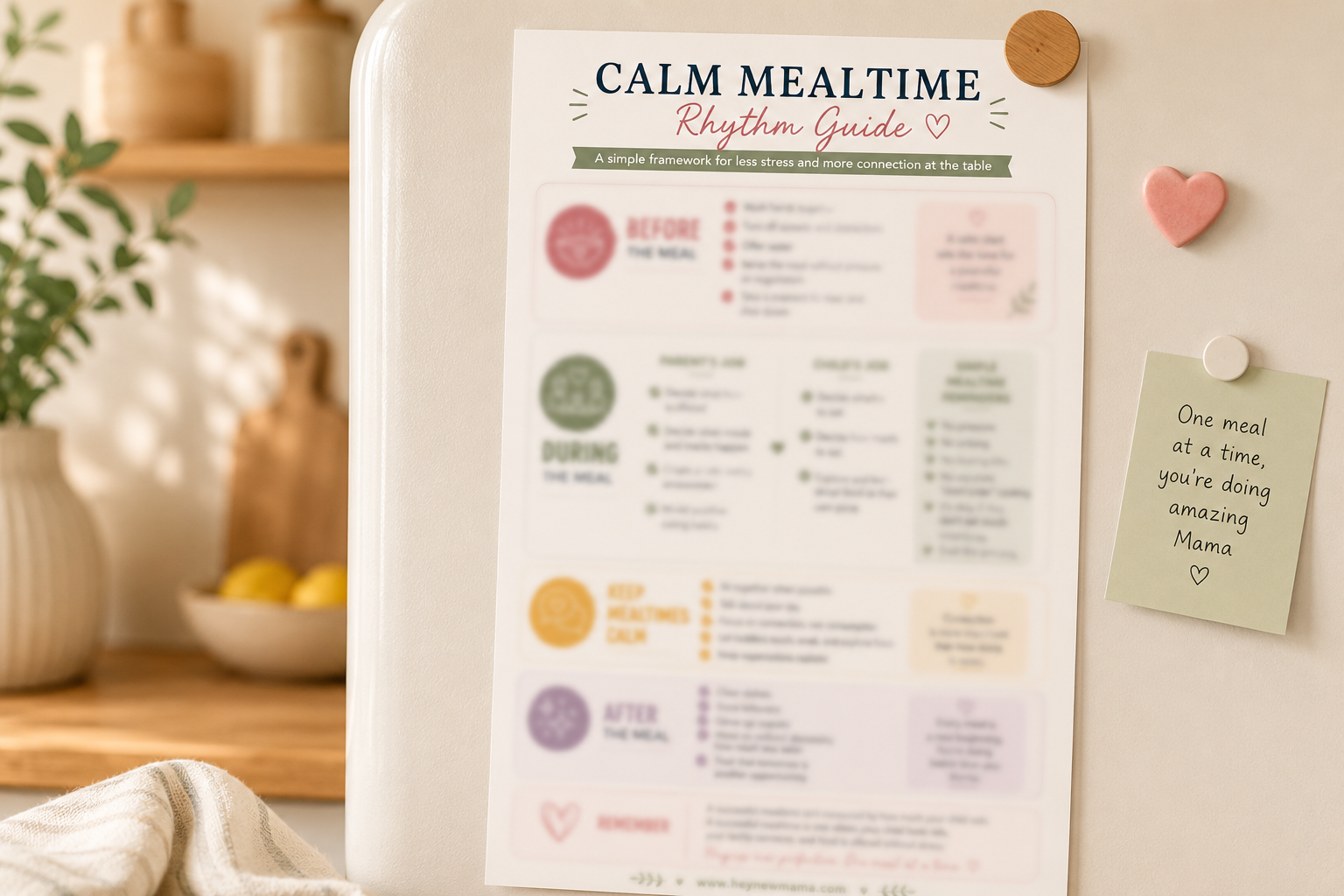
Feeding
Grocery Simplification Guide
Real food. Fewer decisions. Less overwhelm.
Grocery shopping is supposed to support family life — not become another exhausting mental task.
But modern motherhood often turns food into constant decision-making:
- What should I cook?
- What if my toddler won't eat it?
- Should I try healthier meals?
- Do I need more variety?
- Why do I keep buying ingredients I never use?
When every meal feels like a new decision, grocery shopping becomes emotionally draining.
This guide is designed to help you simplify feeding your family in a realistic, sustainable way.
Not Pinterest-perfect meals. Not complicated meal prep systems. Just calmer rhythms that work in real homes.
01Stop Shopping for Your “Ideal Life”
One of the biggest reasons grocery shopping feels overwhelming is because many mothers shop for:
- aspirational meals
- elaborate recipes
- unrealistic routines
- social media inspiration
Then:
- ingredients go unused
- food spoils
- cooking feels stressful
- guilt increases
Instead, shop for your actual season of life.
If your current season is tired, overstimulated, busy, or emotionally stretched — then simple meals are not failure. They are wisdom.
02Build Around Repeat Meals
You do NOT need 25 breakfast ideas, endless recipe research, or constant novelty. Children often thrive with familiarity and repetition.
Choose:
- 3–5 breakfasts
- 3–5 lunches
- 5–7 dinners that you repeat consistently
This reduces decision fatigue, grocery waste, and planning stress. Simple systems create calmer homes.
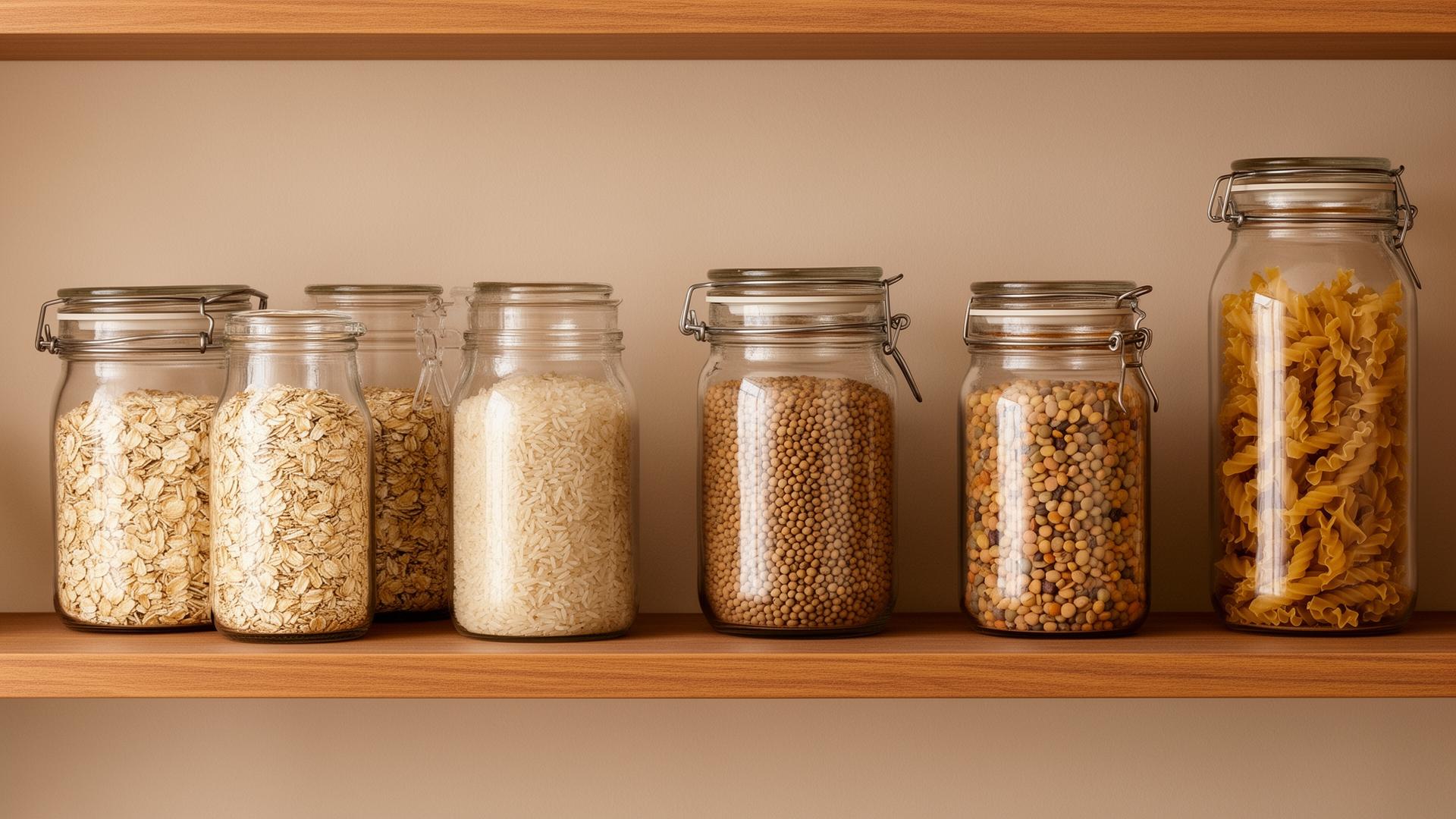
03Create “Core Staples”
Instead of shopping randomly every week, keep a predictable foundation.
Proteins
- eggs
- chicken
- lentils
- yogurt
- cheese
Vegetables
- cucumbers
- carrots
- spinach
- potatoes
- frozen vegetables
Grains & Starches
- rice
- oats
- bread
- pasta
- chapati/paratha
Snacks
- fruit
- yogurt
- nut butter
- crackers
- cheese
Freezer Basics
- frozen fruit
- frozen vegetables
- freezer meals
- frozen flatbread
When your staples stay consistent, meals become easier, shopping becomes faster, and less food gets wasted.
04Reduce Ingredient Complexity
Many meals online require too many ingredients, too many steps, and too much mental energy. Instead, focus on simple combinations, repeat ingredients, and flexible meals.
One container of yogurt can become breakfast, snack, dip, or a smoothie ingredient.
The fewer ingredients you manage, the calmer feeding becomes.
05Keep “Emergency Meals”
Every home needs low-effort backup meals — for exhausting days, sick days, overstimulating days, and low-energy evenings.
Examples:
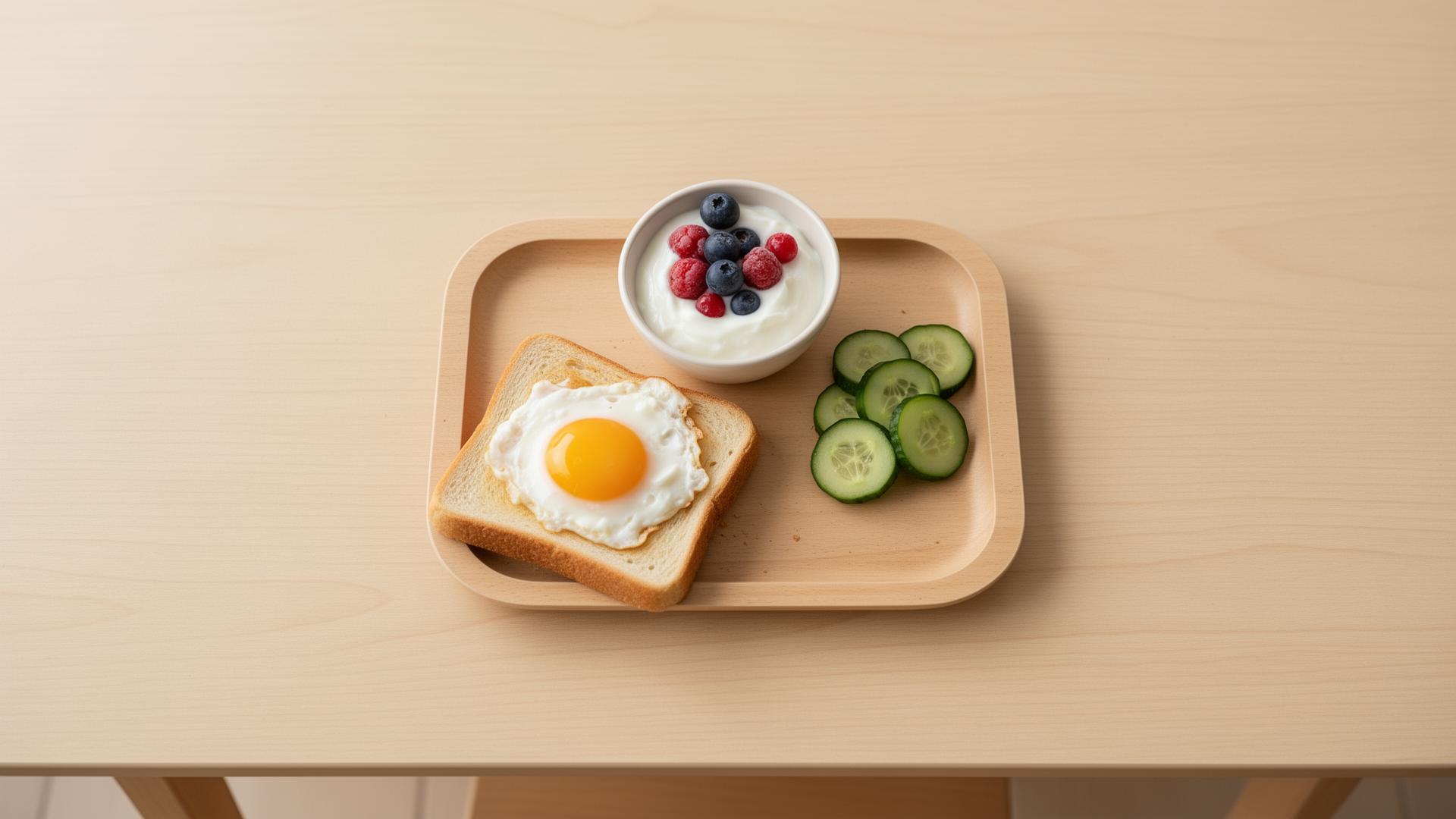
- eggs + toast + fruit
- yogurt bowls
- frozen paratha + cucumber + cheese
- dhal + rice
- pasta + frozen vegetables
Emergency meals reduce takeout dependence, panic, and guilt.
06Let Your Grocery List Reflect Your Values
Your food rhythms can still reflect intentionality, culture, nourishment, and Islamic values without becoming overwhelming.
Simple meals can still be halal-conscious, Sunnah-inspired, culturally rooted, and family-centered.
A peaceful meal matters more than a perfect one.
07Simplify Before You Optimize
You do not need complicated systems, expensive ingredients, perfectly balanced every meal, or elaborate lunch ideas.
Start with:
- consistency
- nourishment
- simplicity
- repeatable rhythms
Calmer feeding creates calmer homes.
Final Reminder
You are not feeding social media. You are feeding your family.
Simple meals made consistently with care are already enough.